 Intro price. Get comandfin.com for Big Sale upto 85% off.

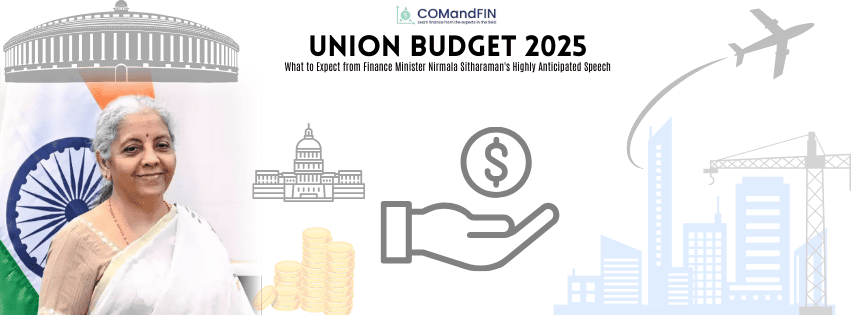
The stage is set for the Union Budget 2025, with Finance Minister Nirmala Sitharaman's eighth Budget speech scheduled for February 1, 2025. This year's budget is seen as a critical moment for India, as industry leaders and analysts have set high expectations for reforms and measures aimed at reviving the economy, stimulating consumer sentiment, and addressing sector-specific challenges. From tax reforms to infrastructure investments, here's a detailed breakdown of the key areas of focus for Budget 2025.
Tax Reforms and Income Tax Slabs
- Income Tax Reforms: One of the most anticipated announcements revolves around income tax reforms. Experts are expecting relief for middle-class taxpayers, with possible revisions to tax slabs and an increase in the exemption limits.
- Simplification of Tax Procedures: There are also calls for simplifying tax procedures, which could be a key theme for this year's budget.
- Transition to New Tax Regime: The question on everyone's mind is whether the government will phase out the old tax regime entirely in favor of the new system, which has seen positive adoption rates.
- Tax Breaks for Startups: Sectors like the fintech and startup ecosystems are hoping for targeted tax breaks, including exemptions from Angel Tax and other startup-related levies.
GST Rationalization
- GST Rationalization: Another key expectation is the rationalization of the Goods and Services Tax (GST) structure. Various sectors, including real estate, construction, and healthcare, have highlighted the need for a smoother, more streamlined tax regime.
- EV Industry Expectations: Stakeholders in the electric vehicle (EV) industry are urging a reduction in the GST rate on EV batteries, which constitute a significant portion of the vehicle’s cost. A uniform GST rate of 5% across the EV value chain could help accelerate adoption and growth in this sector.
Infrastructure and Housing
- Infrastructure Focus: Infrastructure is expected to be a major focus in Budget 2025, with significant allocations likely for both urban and rural development.
- Funding for Road Networks and Metro Systems: Industry leaders are anticipating increased funding for road networks, metro systems, and smart city initiatives.
- Affordable Housing Benefits: There is a strong push for extending affordable housing benefits, with some experts suggesting a potential increase in the price cap for affordable housing projects to ?75 lakh.
- Sustainable Practices in Construction: The construction industry is also pushing for incentives to adopt sustainable and technology-driven practices.

#UnionBudget2025 #TaxReforms #EconomicGrowth #Infrastructure #GST #Healthcare #Education #Technology #StartupSupport
Focus on Health and Education
Digital Transformation and Technology
Sector-Specific Reforms
Budget 2025 and the Introduction of the Direct Tax Code
Discussions around simplifying India's tax system have been ongoing for years, and experts are now expecting that Budget 2025 may lay the groundwork for the long-awaited introduction of a Direct Tax Code (DTC). Rahul Charkha, Partner at Economic Laws Practice, suggests that the budget could either outline a clear roadmap or implement incremental reforms as a step towards the eventual rollout of the DTC. While a comprehensive overhaul of the tax system under the DTC may take time, Budget 2025 is likely to take initial steps to modernize and streamline tax laws, making the system more efficient and taxpayer-friendly in the long run. This approach is expected to bring much-needed clarity and consistency to the Indian taxation landscape.
Edu-Fintech Industry Optimistic About Budget 2025
The edu-fintech sector is highly optimistic about the potential of Budget 2025 to introduce progressive measures aimed at enhancing financial accessibility and fostering innovation in education. Rohit Gajbhiye, Founder and MD of LEO1, expects the Budget to focus on addressing affordability through interest-free or subsidized schemes, along with digital financial solutions and tax incentives for education-related expenses. Additionally, there is hope for policies that will encourage partnerships between fintech players and educational institutions. These partnerships are expected to accelerate the adoption of technology-driven financial systems, bridge funding gaps, and improve cash flow management in the education sector.
The Road Ahead: Challenges and Opportunities
While the government faces challenges, including lagging GDP growth and inflationary pressures, it is also presented with significant opportunities to rejuvenate various sectors of the economy. The focus on infrastructure development, manufacturing, and job creation could stimulate economic activity and consumer spending. However, the success of Budget 2025 will depend on how effectively the government balances fiscal prudence with the need for investment in key growth areas.
Final Thoughts
As Finance Minister Nirmala Sitharaman prepares for her eighth Union Budget speech, the expectations are high. From income tax reforms to large-scale investments in infrastructure, healthcare, education, and technology, the stakes are enormous. Budget 2025 offers an opportunity for the government to create lasting change, foster innovation, and address the economic distress faced by various sectors. The next few weeks will be critical in determining how the government plans to steer the Indian economy toward a path of sustainable growth and prosperity.